



Adhesive strength is the force per unit area required to break an adhesive bond between two surfaces. Accurate measurement of adhesive strength is essential for product development, quality control, and failure analysis.
>> Contact us for friction and wear testing inquiries
What is Adhesive Strength?
Adhesive strength (also called adhesion strength or bond strength) refers to the resistance per unit area when an adhesive bond is broken. It is a key parameter for evaluating the performance of adhesives, pressure-sensitive adhesives, coatings, and surface treatments.
Adhesive strength is affected by factors such as the type of adhesive, surface condition, substrate material, and environmental conditions (temperature, humidity).
Adhesive Strength Measurement Methods
1. Tensile Adhesion Test
The adhesive is applied between two substrates, and tensile force is applied perpendicular to the bonded surface. The maximum load at failure, divided by the bond area, gives the tensile adhesive strength. This is one of the most common methods and is standardized in JIS K 6850 and ISO 4624.
2. Shear Adhesion Test
Shear force is applied parallel to the bonded surface to evaluate the shear adhesive strength. Widely used for evaluating lap-joint bonds in structural adhesives. Standardized in JIS K 6850.
3. Peel Adhesion Test
One flexible substrate is peeled from the other at a defined angle (90°, 180°, or T-peel). Commonly used for pressure-sensitive adhesive tapes, labels, and film laminates. Standardized in JIS Z 0237 and ASTM D903.
HEIDON Equipment for Adhesive Strength Measurement
HEIDON's friction and wear testers can evaluate adhesive and peel strength with appropriate fixtures.
Related Products
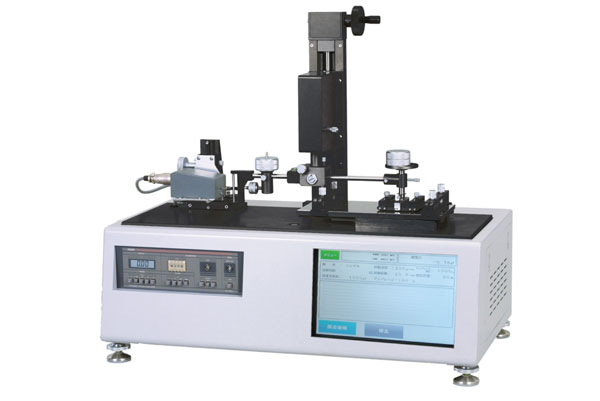
Surface Property Tester TYPE:14FW
Friction, peel, and adhesion measurement with fixture options
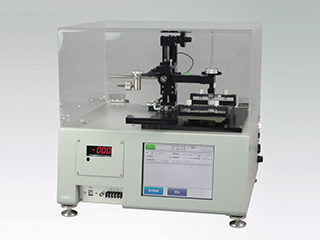
Friction and Wear Tester TYPE:40
Multi-purpose friction and wear tester

HHS2000S/HHS3000S
Load-variable multi-axis test system