



Wear evaluation is the process of quantifying the extent of material loss or surface degradation resulting from mechanical contact. Accurate wear evaluation is essential for predicting component service life and selecting appropriate materials and lubricants.
>> Contact us for friction and wear testing inquiries
What is Wear?
Wear is the progressive loss or displacement of material from a solid surface as a result of mechanical action. The major wear mechanisms are:
- Abrasive wear: Hard particles or asperities cut or plow material from the surface
- Adhesive wear: Material transfers between surfaces due to adhesion at contact junctions
- Fatigue wear: Cyclic loading causes surface or subsurface crack initiation and propagation
- Corrosive wear: Chemical or electrochemical reactions combined with mechanical action accelerate material removal
Wear Evaluation Methods
1. Mass Loss Method
The specimen is weighed before and after the wear test. The mass difference is the wear loss. Simple and widely used, but requires a precision balance and may be affected by debris retention on the specimen.
2. Volume Loss Method
Wear volume is calculated from the wear scar dimensions measured by profilometry or microscopy. Provides more information than mass loss and is preferred when material density is not well-known.
3. Wear Depth / Scar Width Measurement
The depth or width of the wear scar is measured using a surface profilometer or optical microscope. Useful for thin coatings and surface treatments where mass change is too small to detect.
4. Wear Rate
Wear rate is defined as the volume (or mass) of material removed per unit sliding distance and normal force (specific wear rate, mm³/N·m). This parameter allows comparison of wear performance across different test conditions.
Related Products
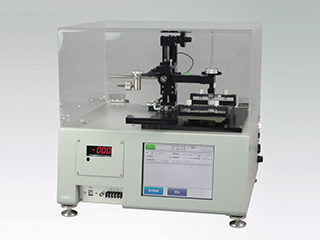
Friction and Wear Tester TYPE:40
Wear evaluation under various loads and speeds
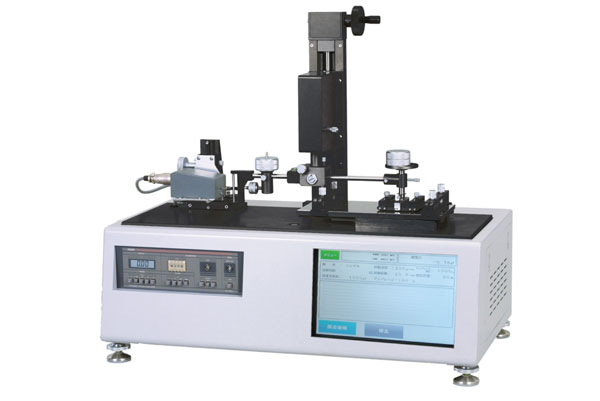
Surface Property Tester TYPE:14FW
Reciprocating wear and friction measurement

HHS2000S/HHS3000S
Multi-axis load-variable wear test system