



In friction and wear testing, the fixture (jig) attached to the tester determines the contact geometry between the specimen and the counterpart material. Selecting the appropriate fixture is as important as selecting the tester itself.
>> Contact us for friction and wear testing inquiries
Why Fixtures Matter
Friction and wear testing machines are general-purpose instruments that can simulate a wide range of real-world contact conditions by changing fixtures. The same tester body can perform pin-on-flat, ball-on-flat, flat-on-flat, ring-on-flat, and many other contact geometries.
Key Fixture Types
1. Pin-on-Flat
A cylindrical pin slides against a flat specimen. The most common configuration for measuring friction coefficient and wear rate. Used for plastics, metals, coatings, and lubricant evaluation.
2. Ball-on-Flat
A ball slides or rolls on a flat specimen. The point contact geometry produces high contact pressures and is widely used for thin film and coating evaluation.
3. Flat-on-Flat (Sled)
Two flat surfaces slide against each other. Used for measuring the friction of packaging films, papers, and textiles per JIS K 7125 and similar standards.
4. Ring-on-Flat
A ring-shaped indenter slides against a flat specimen. Provides a line contact geometry, useful for simulating seal and gasket contacts.
5. Stylus / Needle
A sharp diamond or steel stylus scratches the specimen surface. Used for scratch hardness testing, coating adhesion evaluation, and scribing applications.
6. Steel Wool / Abrasive Cloth
Steel wool or abrasive cloth is pressed against the specimen and rubbed. Used to evaluate the durability and haze resistance of hard coats and display films per JIS K 7317:2022.
Related Products
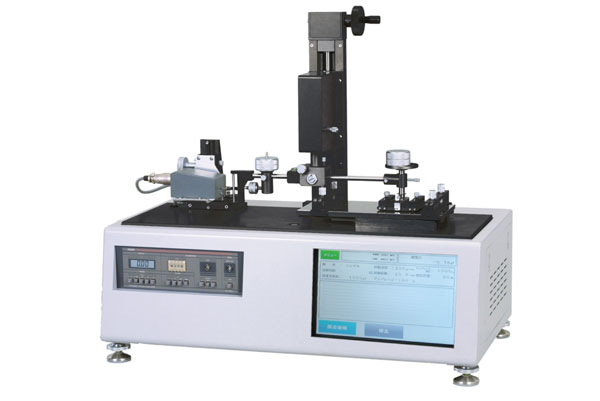
Surface Property Tester TYPE:14FW
Compatible with a wide range of fixtures
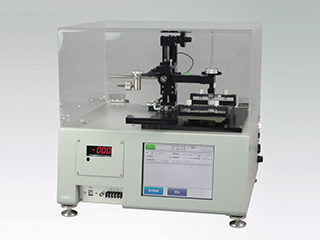
Friction and Wear Tester TYPE:40
Multi-purpose tester with extensive fixture options
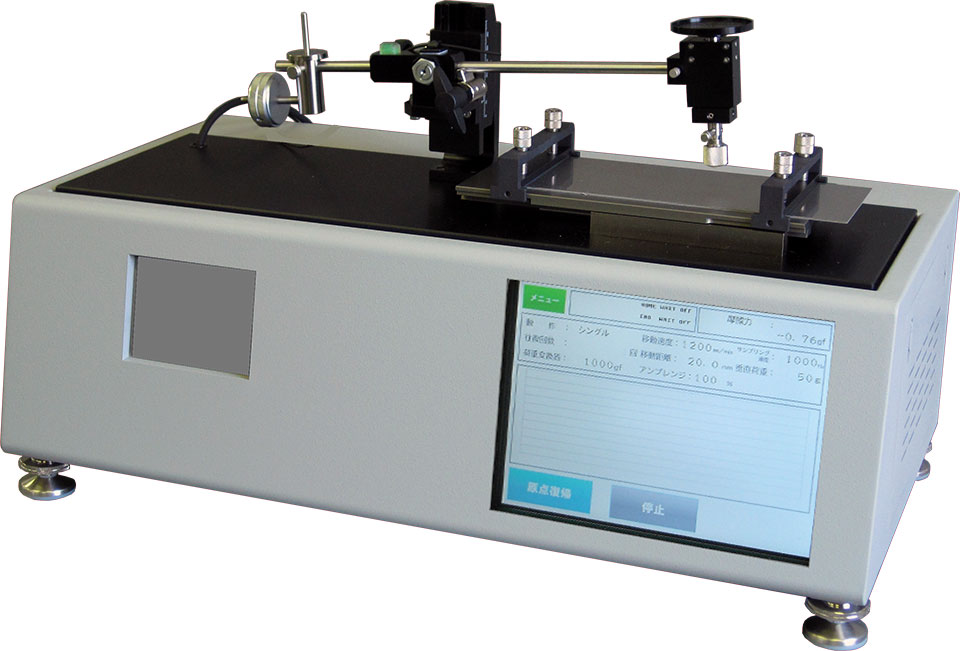
Steel Wool Durability Tester TYPE:38F
Dedicated steel wool abrasion tester