



The coefficient of friction is the factor by which the normal force acting perpendicular to the contact surface is multiplied to obtain the friction force. It is a key parameter for describing friction between objects and is broadly divided into the static friction coefficient and the kinetic friction coefficient.
This article explains the fundamentals of friction coefficients and the general laws governing them.
👉 For friction coefficient measurement: Surface Property Tester TYPE:14FW
What is the Coefficient of Friction?
The coefficient of friction (μ) is defined by the following relationship:
Friction force F = μ × Normal force N
The coefficient of friction is a dimensionless number that quantifies how easily one surface slides over another. A higher value means more friction; a lower value means less friction.
Static Friction Coefficient vs. Kinetic Friction Coefficient
Static Friction Coefficient (μs)
The static friction coefficient is the ratio of the maximum friction force just before an object begins to move to the normal force. It represents the resistance that must be overcome to initiate sliding. In general, the static friction coefficient is larger than the kinetic friction coefficient.
Kinetic Friction Coefficient (μk)
The kinetic friction coefficient is the ratio of the friction force acting on an object in motion to the normal force. It is also called the dynamic friction coefficient. Because it represents the friction during sliding, it is typically smaller than the static friction coefficient.
Amontons’ Laws of Friction
The classical laws governing friction were formulated by Guillaume Amontons (1699) and later extended by Charles-Augustin de Coulomb (1781):
- First law: The friction force is proportional to the normal force.
- Second law: The friction force is independent of the apparent contact area.
- Third law (Coulomb): Kinetic friction is independent of sliding velocity.
These laws hold well for many engineering materials under moderate conditions. However, for soft materials (rubber, polymers) or at very low loads, deviations are commonly observed.
Measuring the Coefficient of Friction
HEIDON offers multiple instruments for measuring both static and kinetic friction coefficients.
Related Products
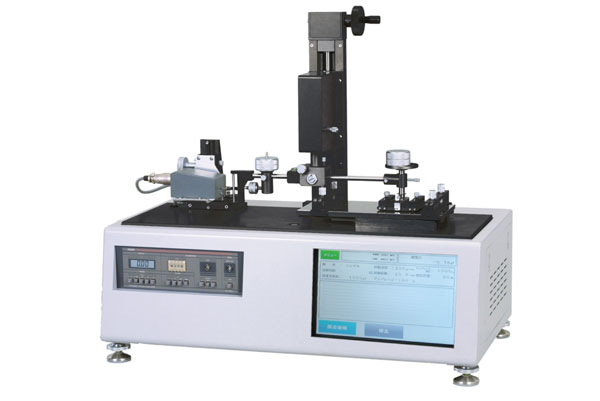
Surface Property Tester TYPE:14FW
Simultaneous measurement of static and kinetic friction coefficients
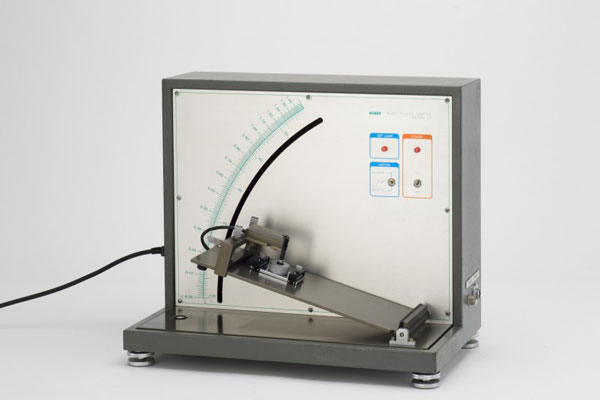
Static Friction Coefficient Tester TYPE:10
Incline-method static friction measurement
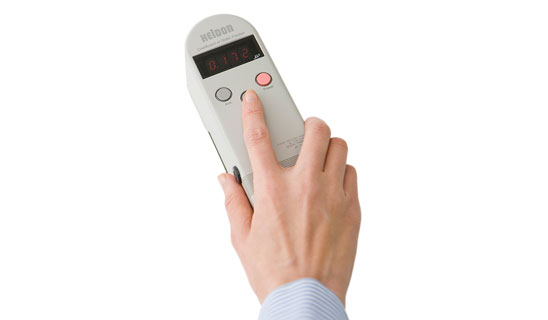
Portable Friction Meter TYPE:94i-II
On-site kinetic friction measurement